

Voice of the Sudanese National Movement
The Movement for Change
The Original Democratic Unionist Party
The Movement for Change within the Original Democratic Unionist Party is a movement that reflects the dynamism of the younger generations within the national unionist movement, who became involved in the political work of the Unionists at universities and higher education institutions during the last quarter of the twentieth century, and in the early years of the first quarter of the twenty-first century. This period was characterised by the expansion and proliferation of Islamist movements within higher education institutions and amongst intellectuals, the educated and professionals; The qualitative shift lay in the creation of a movement capable of countering this expansion, employing the very same tools in intellectual, substantive and media-based confrontation, whilst operating under extremely difficult circumstances: the previous generations’ lack of conviction regarding the necessity of establishing political organisations within universities, owing to their idealistic conviction that universities should be devoted solely to academic pursuits, and their failure to recognise the gravity of the ongoing and escalating recruitment of male and female students by extremist Islamist movements, as well as their reluctance to spend funds on intellectual, propaganda and political work through university associations, in contrast to the expenditure by Islamist movements. These generations then faced, first-hand, a thirty-year period of the Islamist movement’s coup led by Lieutenant General Omar al-Bashir, which deprived them of scholarships abroad and employment in the civil service, owing to the availability of detailed information about them from groups of students and agents of Islamist movements during their university studies, which gave rise to a deep-seated sense of resentment, These generations continued to reject the party’s political collaboration with Omar al-Bashir’s regime and sought to make their voices heard by the party’s political leadership, but found no sympathetic ear. Following the Revolution of Change in December 2018, and through ongoing discussions within the party’s groups, these generations discovered an intellectual affinity amongst themselves that naturally led them to form a ‘Current of Change’ within the Federalist Movement, which manifested itself in groups based in Sudan and in various diaspora communities frequented by Sudanese people, particularly in the Arab Republic of Egypt and the Arab Gulf states. .
The Leadership Our City Needs
Nullam tincidunt ut nunc et porttitor. Sed vel posuere enim, id aliquam lacus. Ut accumsan ipsum turpis, ut sagittis mi porta
Connect
Vision
Vision
Actionable Issues
History
The author’s vestibule is not filled with food
Nunc dignissim risus id metus
Cras iaculis ultricies nulla
The author’s vestibule is not filled with food
Support a Cause
Archive

On the National Movement in Sudan
The National Movement in Sudan:
Its origins and development
The Sudanese national movement emerged in the first half of the 20th century under British-Egyptian joint rule (1898–1956). Its primary aim was to resist colonialism and strive for self-determination and independence.
The national movement went through several stages:
The early phase of national consciousness (1900–1924): Cultural and educational societies were established which helped to foster national consciousness.
The 1924 Revolution:
It was led by Sudanese officers and intellectuals, with Ali Abdul-Latif among its most prominent figures, and constituted the first organised national movement against colonialism.
The Alumni Conference period (1938): It became a centre for national political activity, and it was from here that most of the leaders and modern Sudanese political parties emerged.
The Era of Political Parties (the 1940s and 1950s):
The parties that led the political struggle until independence in 1956 were formed.
The National Unionist Movement
The Federalist National Movement was one of the most important factions within the Sudanese national movement. It was founded on the idea of the unity of the Nile Valley and the establishment of a federation between Sudan and Egypt, with Sudan being granted extensive self-government.
Its intellectual roots:
The Unionist movement was linked to the historical and cultural ties between Sudan and Egypt, and believed that cooperation or union with Egypt would guarantee independence from British rule.
Among the most prominent forces and figures who led the federalist movement were:
Leader Ismail al-Azhari
Mohammed Ahmed Al-Mahjoub (during certain phases of the national movement prior to the divergence of political orientations)
Leaders of the Graduates’ Conference who championed the idea of the unity of the Nile Valley.
The Formation of Federalist Parties
The federalist movement developed through a number of political organisations, the most important of which were:
The Brothers’ Party, founded by Ismail al-Azhari in 1943.
– The National Unionist Party, which was founded in 1952 following the merger of a number of unionist groups.
Its role in independence
The National Unionist Party won the 1953 elections and formed the first national government, led by Ismail al-Azhari.
Although the federalist movement initially called for union with Egypt, political developments and the Sudanese national will led its leaders to adopt the option of full independence.
On 19 December 1955, the Sudanese Parliament unanimously declared Sudan’s independence, which was officially proclaimed on 1 January 1956.
The most significant achievements of the National Unionist Movement
Leading the political struggle against British colonialism.
To help unite broad sections of the Sudanese population around the cause of self-government.
Winning the first Sudanese parliamentary elections.
The government leadership that led Sudan to independence.
Consolidating party politics and democracy in modern Sudan.
Summary
The Federalist National Movement is one of the most important branches of the Sudanese national movement. It began by calling for the unity of the Nile Valley and union with Egypt, and subsequently played a decisive role in achieving Sudan’s independence.
Ismail al-Azhari is considered its most prominent figure, and the Pan-Nationalist Party is regarded as the main political instrument that led this movement until independence was achieved in 1956.
Mission and Values
Are you ready to take the next step and support the Voice of the Sudanese National Movement?
Get Involved
Visit by His Excellency the Sudanese Prime Minister, Mr Ismail Al-Azhari, to the city of Kassala
In the Eastern Region
News & Updates
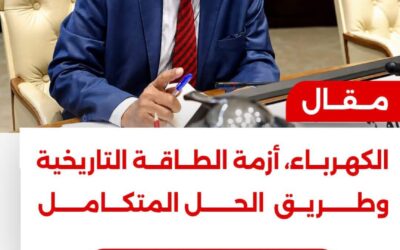
Electricity: The Historic Energy Crisis and the Path to a Comprehensive Solution
Electricity: The Historic Energy Crisis and the Path to a Comprehensive Solution By Adel Ali Ibrahim, Minister of Energy and Mining in the Revolutionary Government: ‘Oh God, look at the state of this country.’Is it not enough for the grief-stricken Sudanese people to have suffered the consequences of your conflict, which has hung over their heads for more than three years? Is it not enough that the people have endured the ruin of their homes and the devastation...

Hello world!
Welcome to WordPress. This is your first post. Edit or delete it, then start writing!
Subscribe
Upcoming Events
Phasellus non mollis risus at Sagittis.
24 August 2018 | San Francisco
Nullam tincidunt ut nunc et porttitor. Sed vel posuere enim, id aliquam lacus. Aliquam erat volutpat. Nullam tincidunt ut nunc et porttitor. Sed vel posuere enim, id aliquam lacus. Aliquam erat volutpat.
Curabitur aliquet quam id dui posuere blandit
24 August 2018 | San Francisco
Nullam tincidunt ut nunc et porttitor. Sed vel posuere enim, id aliquam lacus. Aliquam erat volutpat. Nullam tincidunt ut nunc et porttitor. Sed vel posuere enim, id aliquam lacus. Aliquam erat volutpat.
Vivamus suscipit tortor eget felis
24 August 2018 | San Francisco
Nullam tincidunt ut nunc et porttitor. Sed vel posuere enim, id aliquam lacus. Aliquam erat volutpat. Nullam tincidunt ut nunc et porttitor. Sed vel posuere enim, id aliquam lacus. Aliquam erat volutpat.
 Arabic
  English (UK)
  Français
  Deutsch
  日本語
日本語  Español
  简体中文
简体中文