
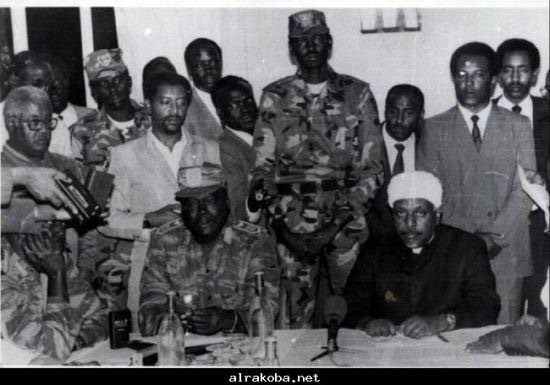
🛑 Al-Mirghani – Garang…
🫵 That agreement which could have spared the Sudanese all this tragedy and devastation, which has persisted from 1988 to the present day!!
Legal Adviser Mohammed Al-Fateh Hadra wrote:
🖤On the anniversary of the passing of our master, Sayyid Muhammad Uthman al-Mirghani, the initiator of the al-Mirghani–Garang Agreement
🧭Yesterday, Friday 13 November 2026, Mr Mohammed Othman Al-Mirghani passed away, may God have mercy on him.
With his passing, we must recall one of the most significant political initiatives in Sudan’s modern history; the initiative of the man who managed to bring together the government and the Sudan People’s Liberation Movement, and to open a door that could have led to an end to the civil war, the achievement of peace, and the preservation of Sudan’s unity.
It is the Mirghani–Garang Agreement, which was signed in Addis Ababa on 16 November 1988.
In my view, this agreement was one of the most significant historic opportunities Sudan had to spare itself many years of war, killing and destruction, and it might even have spared us the secession of South Sudan, and the ensuing political, economic and social tragedies, leading to the collapse, fragmentation, displacement and death we are experiencing today.
📌Firstly: What did the Al-Mirghani–Garang Agreement entail?!
The agreement was not merely a fleeting political understanding between Mr Mohammed Othman al-Mirghani and Dr John Garang; rather, it was a comprehensive plan to end the war, address the root causes of the Sudanese crisis, and set the country on the path to a political and constitutional solution.
Among the most significant provisions of the agreement were a ceasefire, the lifting of the state of emergency, the annulment of military agreements affecting Sudan’s sovereignty, and the suspension of certain provisions of the September laws, in particular those relating to borders, until the convening of the National Constitutional Conference, which was intended to discuss issues of governance, the constitution and the relationship between religion and the state, and to establish solutions agreed upon by the Sudanese people.
And here we must pause to consider an important point!!
The agreement did not provide for the abolition of Islamic law, as the National Islamic Front had claimed, but rather provided for a temporary suspension of certain disputed articles, and referred the matter to the Comprehensive National Constitutional Conference for a final decision.
In other words, the agreement opened the door for Sudanese people to sit down together, engage in dialogue and reach a consensus on the future of their country, rather than killing one another in the name of religion, politics or power.
📌Secondly: How did the National Islamic Front oppose the agreement?!
The National Islamic Front has realised that Mr Mohammed Othman al-Mirghani’s success in securing this agreement represents a major political achievement, and that the convening of the National Constitutional Conference, the cessation of hostilities and the paving of the way for a political solution would put an end to its project of monopolising power and exploiting religion in political conflict.
It therefore opposed the agreement, exploited the religious sentiments of the Sudanese people, and spread the claim that the agreement aimed to abolish Islamic law, thereby mobilising the people against it, to the extent that, in the eyes of large sections of the Sudanese population, the issue came to be seen as a battle between Islam and unbelief, rather than a political agreement seeking to end the war and save the country.
Ironically, Hassan al-Turabi himself later returned to discuss the issues of apostasy and banditry, the application of hudud punishments to non-Muslims, and the exemption of South Sudan from certain provisions – issues which the agreement had left to be resolved by the National Constitutional Conference.
So how could what the agreement proposed have been a conspiracy against Sharia, when those very same issues subsequently became the subject of political and jurisprudential debate?!
📌Thirdly: The coup of 30 June 1989… Why was it timed like that?!
And here we come to one of the most serious ironies in Sudan’s modern history!!
The agreement had entered the practical implementation phase, and steps had begun to suspend the September laws in preparation for the implementation of what had been agreed.
On 29 June 1989, Al-Sadiq Al-Mahdi signed the draft law suspending those laws; the Cabinet was due to consider the matter on 30 June, to be followed by parliamentary proceedings on 1 July.
But what happened?!
On the night of 30 June 1989, and before those procedures could be completed, the army, led by Brigadier Omar Hassan Ahmed al-Bashir, carried out a military coup, whereby it seized power, dissolved the institutions of government, and halted the political and constitutional process that had been paving the way for the implementation of the Mirghani–Garang Agreement.
Think carefully about this timing!!
The coup took place just as the country was on the verge of taking the most significant practical step towards implementing the agreement, namely removing the obstacle that the Islamic Front had consistently raised against it: the September Laws.
In my view, the National Islamic Front’s desire to oppose the Mirghani–Garang Agreement and to derail this political process was the most significant political motive behind the coup of 30 June 1989.
Indeed, I would not be exaggerating if I were to say that Al-Mirghani’s success in persuading Al-Sadiq Al-Mahdi and the Umma Party to agree to the deal, and the threat this posed to the Islamic Front’s project, was one of the main reasons that drove the group to seize power through a military coup, rather than resorting to political and constitutional means.
And what could have spared them that more than the agreement between Al-Mirghani and Garang!!
Had the agreement been allowed to run its course, and had the National Constitutional Conference been convened, Sudan might have avoided years of war, killing and destruction; it might have preserved its unity; and we would not have ended up in the situation we find ourselves in today.
📌Fourthly: From the Mirghani–Garang Agreement to the Naivasha Agreement… What price has Sudan paid?!
After the Al-Mirghani–Garang agreement fell through, the war dragged on for many years, claiming thousands of lives and subjecting Sudan to enormous political, economic and social strain.
Then, some sixteen years later, the Islamic Movement resumed negotiations with the Popular Movement led by John Garang, and the Comprehensive Peace Agreement was signed in Naivasha in 2005.
The irony is that the Islamic Front has returned to the negotiating table to discuss the very aspects of the Mirghani–Garang Agreement that it had previously rejected, but only after the Sudanese people had paid a heavy price in blood, devastation and destruction.
The Naivasha Agreement granted South Sudan the right to self-determination, which ultimately led to its secession in 2011, as well as provisions regarding the Abyei region and popular consultations in South Kordofan and Blue Nile.
And so Sudan went from an opportunity that could have resolved its crisis and preserved its unity to an agreement that came after a long war and ended with the secession of a cherished part of the homeland.
📌Fifth: Will history repeat itself with the framework agreement?!
Here, I would like to draw the reader’s attention to another paradox, which I see as bearing a striking resemblance to what happened in 1989.
Following the glorious December Revolution, the Islamic Movement, the National Congress Party and the so-called ‘broad Islamic current’ refused to accept that the country should proceed along the path of a civilian transition, so they fought against the transitional government, incited opposition to it, formed an alliance with army commanders, the Rapid Support Forces and certain armed movements, backed the sit-in at the Presidential Palace, and subsequently supported the coup of 25 October 2021 which overthrew the civilian government.
Subsequently, the Forces of Freedom and Change and the civil forces succeeded in persuading the commanders of the army and the Rapid Support Forces, Lieutenant General Abdel Fattah al-Burhan and Lieutenant General Mohamed Hamdan Dagalo, to sign the framework agreement on 5 December 2022, which was intended to pave the way for a return to civilian rule, reform of the military and security institutions, and the establishment of a unified, professional national army.
However, the Islamic Movement, the National Congress Party and the so-called Broad Islamic Movement all opposed the Framework Agreement, just as they had previously opposed the Mirghani–Garang Agreement.
In my view, they did not merely oppose the agreement politically and in the media; rather, they worked to undermine it and stir up discord between the army and the Rapid Support Forces, until the situation culminated in the war that broke out on 15 April 2023.
I would like to recount here what happened around the Sports City on the night the war broke out.
The civilian forces, the Forces of Freedom and Change, and some of the Darfur armed movements had succeeded in setting 15 April as the date for a meeting between al-Burhan and Hamidti, in an effort to halt the escalation between them, contain the growing differences, and spare the country from an all-out military confrontation.
However, instead of both sides attending that meeting, we were surprised to see military clashes break out that morning.
In my view, elements of the Islamic Movement and the National Congress Party within the army were behind the incitement to spark this confrontation, by mobilising their soldiers in a provocative display around the Rapid Support Forces stationed at the Sports City, surrounding them and opening fire on them, before luring them into pursuing the forces that had attacked them, until the clashes reached the vicinity of the Army General Command.
The aim, in my view, was to lead Army Commander Al-Burhan to believe that it was the Rapid Support Forces who had declared war on the army and were carrying out a military coup against the armed forces, and then to present this very same narrative to the Sudanese people, telling them that what had happened was a coup by the Rapid Support Forces, backed by the Forces of Freedom and Change and the youth of the revolution!!
Are these not the very same circumstances surrounding the coup of 30 June 1989?!!
Was there not a group that opposed a political agreement, feared it would lead to a democratic transition, worked to thwart it, and then exploited the turmoil to seize power?!
ألم تكن هناك خديعة سياسية، جرى فيها تصوير الأمور للشعب السوداني على غير حقيقتها، وتوظيف العاطفة الدينية والسياسية لتبرير الانقلاب والاستيلاء على الحكم؟!
سبحان الله!!
ذات المؤامرة، وذات الخديعة، وذات الأسلوب في استغلال مخاوف الشعب السوداني وتضليله، حتى تنطلي عليه الرواية التي تخدم مصالح الجماعة، وتدفع البلاد إلى كارثة جديدة.
📌سادساً: ما أشبه الليلة بالبارحة!!
بعد كل هذا الخراب والدمار، وبعد أن دُمرت مؤسسات الدولة، وقُتل وشُرد الملايين من أبناء الشعب السوداني، وبعد أن أصبحت البلاد مهددة في وحدتها ومستقبلها، نرى الحديث يعود مرة أخرى عن الحوار السوداني السوداني، وعن التوافق السياسي، وعن ضرورة الجلوس إلى طاولة التفاوض.
ولا تستغربوا إن عادوا قريباً إلى ذات المبادئ والبنود التي قام عليها الاتفاق الإطاري، بعد أن حاربوه وأفشلوا مساره، وساهموا في إشعال الحرب التي دفعت البلاد إلى هذا المصير!!
فما الذي كان يمنعهم من قبول الحوار والتوافق قبل أن يشتعل القتال؟!
وما الذي كان يمنعهم من ترك السودانيين يتوافقون على مستقبل بلادهم، بدلاً من دفعهم إلى الحرب والقتل والتشريد؟!
إن المأساة الكبرى أن الشعب السوداني هو الذي يدفع دائماً ثمن صراعات هذه الجماعة على السلطة، وهو الذي يفقد أبناءه وبيوته ومدنه ومؤسساته، بينما تعود الجماعة بعد كل كارثة لتطرح ذات الشعارات، وتدعو إلى ذات الحلول التي كانت تحاربها بالأمس.
📌ختاماً..📌
رحم الله السيد محمد عثمان الميرغني، صاحب المبادرة والإتفاق الذي كان يمكن أن يفتح للسودان طريقاً آخر غير الحرب ، وأن يجنب شعبه كثيراً من الدماء والدمار والانقسام.
قد نختلف حول السيد الميرغني، وقد نختلف حول تجربته السياسية، لكن من الإنصاف أن نتذكر له هذا الإنجاز، وأن نعترف بأن إتفاقه مع جون قرنق كان هو الفرصة التأريخية الأكبر التي أضاعها أهل السودان، وكان يمكن أن تكون هي البداية لسلام حقيقي ووحدة وطنية قائمة على التوافق والعدالة بين كل السودانيين ، لولا مافعلته بهم جماعة الجبهة الإسلامية القومية أو ماتسمي الآن بالحركة الإسلامية أو التيار الإسلامي العريض وعناصرهم داخل الجيش السوداني في العام 1989 ‼️😡 💢
🫵 للأسف الشديد..
فيما يبدو ستظل هكذا هي أفعال ومؤامرات هذه الجماعة الخبيثة وإن غيرت جلدها أو إسمها، وذلك لأنها جماعة خبيثة في أصل منهجها وصفة أخلاق كل المنتسبين إليها وأنصارها..
🫵لهذا..سترون كيف ستتواصل جرائمهم في حق الشعب السوداني ولن تتوقف قريباً ‼️💢
إن التأريخ لا يرحم، والشعوب التي لا تتعلم من تجاربها تظل تدفع ثمن أخطاء الماضي مرة بعد أخرى.
رحم الله السيد محمد عثمان الميرغني، ورحم الله كل من فقدناهم في حروب السودان ومآسيه، وحفظ الله ما تبقى من هذا الوطن، ورد إليه أمنه وسلامه ووحدته .
 Arabic
 English (UK)
 Français
 Deutsch
 日本語
 Español
 简体中文