
An analysis of this case from the perspective of the law and military practice does indeed reveal several paradoxes and structural and procedural shortcomings that warrant closer examination, whether in relation to the military structure or the legal characterisation of the charges.
The flaws and weaknesses in this incident can be highlighted by the following points:
1. Irregularities in the military hierarchy and rank structure
One of the established principles of military customs and laws is respect for the chain of command and military traditions (Military Protocol).
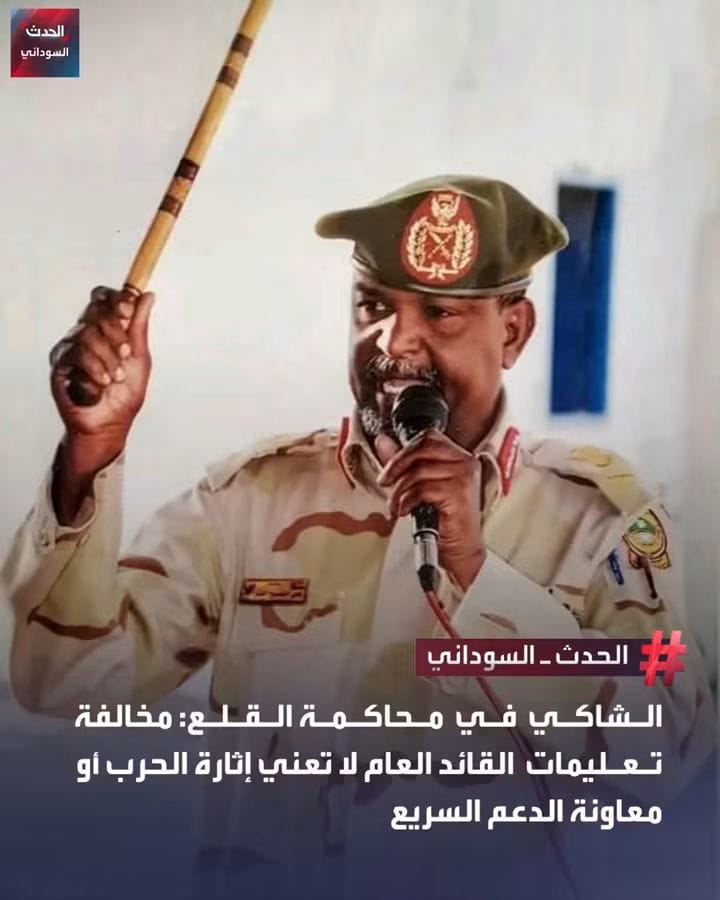
Rank disparity: where the complainant or the lead investigator in a case involving a high-ranking officer (“Lieutenant General”) is an officer of the rank of (“corporal”), reveals a clear flaw in the military institution’s treatment of its former commanders.
Avoiding direct confrontation: The decision to put forward an officer to act as the spokesperson for the complaint could be interpreted as an attempt by the military leadership to distance itself from direct confrontation with a former officer of the same rank, which reflects a sense of embarrassment or a desire to avoid a confrontation between comrades-in-arms by commanders of the same rank.
2. Legal inconsistency in the complainant’s testimony
The hearing revealed a fundamental contradiction that undermines the solid basis of the charge:
Legal characterisation versus the charges brought: The complainant himself acknowledged that failure to report or to carry out a military order constitutes a “breach of military orders”, but he explicitly stated that this does not amount to the offences of inciting war against the state, undermining the constitutional order or aiding the Rapid Support Forces.
Excessive charging: This demonstrates an unjustified broadening of the legal classification by the prosecution or the complainants, whereby an “administrative or regulatory offence” (failure to report) into “crimes against the state”, which has weakened the prosecution’s legal case against the defence.
3. Ignoring the practical realities and the circumstances of war
The instructions to “report to the nearest unit” ignored the reality on the ground and the intensity of the conflict:
The difficulty of proving the charge and the relevant mechanisms: The accused remained at home and did not take part in any hostilities against the army; indeed, his stance is made clear by what he said to the officers who wished to join the army: “Go ahead, and may God protect you”, which exonerates him from the charge of intentionally supporting the opposing side or inciting soldiers to disobey orders.
The application of military regulations to retired personnel: The prosecution insists that reporting requirements apply with the same rigour to an officer who was retired in 2016 (years before the outbreak of the conflict) creates a grey area regarding the extent of ongoing judicial and military authority over retirees in exceptional circumstances.
4. Manifestations of institutional dysfunction
This trial highlights several issues that point to shortcomings in the management of military case files:
Confusion in judicial proceedings: the combination of major political/sovereignty-related charges (undermining the regime) with breaches of internal military discipline.
Abuse of military procedures: the use of military trial mechanisms to settle disputes or settle organisational scores, rather than relying on conclusive material evidence.
Weakness of the case: The prosecution relied primarily on “failure to report” as evidence of treason or aiding the enemy; this is a weak line of reasoning, devoid of any ‘active act’ proving actual participation in hostilities.
An analysis of this case from the perspective of the law and military practice does indeed reveal several paradoxes and structural and procedural shortcomings that warrant closer examination, whether in relation to the military structure or the legal characterisation of the charges.
The flaws and weaknesses in this incident can be highlighted by the following points:
1. Irregularities in the military hierarchy and rank structure
One of the established principles of military customs and laws is respect for the chain of command and military traditions (Military Protocol).
Rank disparity: where the complainant or the lead investigator in a case involving a high-ranking officer (“Lieutenant General”) is an officer of the rank of (“corporal”), reveals a clear flaw in the military institution’s treatment of its former commanders.
Avoiding direct confrontation: The decision to put forward an officer to act as the spokesperson for the complaint could be interpreted as an attempt by the military leadership to distance itself from direct confrontation with a former officer of the same rank, which reflects a sense of embarrassment or a desire to avoid a confrontation between comrades-in-arms by commanders of the same rank.
2. Legal inconsistency in the complainant’s testimony
The hearing revealed a fundamental contradiction that undermines the solid basis of the charge:
Legal characterisation versus the charges brought: The complainant himself acknowledged that failure to report or to carry out a military order constitutes a “breach of military orders”, but he explicitly stated that this does not amount to the offences of inciting war against the state, undermining the constitutional order or aiding the Rapid Support Forces.
Excessive charging: This demonstrates an unjustified broadening of the legal classification by the prosecution or the complainants, whereby an “administrative or regulatory offence” (failure to report) into “crimes against the state”, which has weakened the prosecution’s legal case against the defence.
3. Ignoring the practical realities and the circumstances of war
The instructions to “report to the nearest unit” ignored the reality on the ground and the intensity of the conflict:
The difficulty of proving the charge and the relevant mechanisms: The accused remained at home and did not take part in any hostilities against the army; indeed, his stance is made clear by what he said to the officers who wished to join the army: “Go ahead, and may God protect you”, which exonerates him from the charge of intentionally supporting the opposing side or inciting soldiers to disobey orders.
The application of military regulations to retired personnel: The prosecution insists that reporting requirements apply with the same rigour to an officer who was retired in 2016 (years before the outbreak of the conflict) creates a grey area regarding the extent of ongoing judicial and military authority over retirees in exceptional circumstances.
4. Manifestations of institutional dysfunction
This trial highlights several issues that point to shortcomings in the management of military case files:
Confusion in judicial proceedings: the combination of major political/sovereignty-related charges (undermining the regime) with breaches of internal military discipline.
Abuse of military procedures: the use of military trial mechanisms to settle disputes or settle organisational scores, rather than relying on conclusive material evidence.
Weakness of the case: The prosecution relied primarily on “failure to report” as evidence of treason or aiding the enemy; this is a weak line of reasoning, devoid of any ‘active act’ proving actual participation in hostilities.
https://www.facebook.com/share/v/1Le8L5Aide/?mibextid=wwXIfr
https://www.facebook.com/share/v/1LhAHDsc3x/?mibextid=wwXIfr
 Arabic
  English (UK)
  Français
  Deutsch
  日本語
日本語  Español
  简体中文
简体中文