
An in-depth look at the Islamic movement in Sudan.
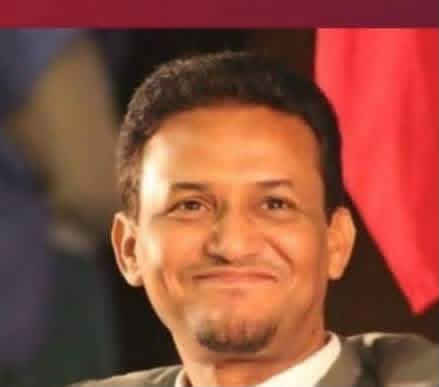
A presentation by Dr Mohammed al-Mukhtar al-Shanqiti, Professor of Political Ethics, at a seminar on the Sudanese Islamic movement.
By Dr Abdullah Al-Tayeb Ali Al-Yas, (PhD), (CGE), (CRMP), governance expert, certified risk management professional and expert in international relations.
- Dr Muhammad al-Mukhtar says that, overall, the experience of the Islamic movement in Sudan is one of the richest and most profound contemporary Islamic experiences, and I have had the privilege of following it for many years. I wrote my first book on the subject, *The Islamic Movement in Sudan: An Introduction to its Strategic and Organisational Thought*, as well as a booklet on Dr al-Turabi, may God have mercy on him, and numerous articles on the subject.
- In short, what I have concluded from my study of the Islamic movement in Sudan is that it was the greatest organisational movement in contemporary history during its active period, and that it was the most unsuccessful Islamic experiment in governance; that is the general picture.
- However, if we were to examine this in a little more detail, the Islamic movement in Sudan, during its active period spanning from 1944 to 1989, achieved a level of innovation in various fields that no other Islamic movement had matched.
- Whether in organisational structure; strategic planning; relations with communities and other political forces, relations with the authorities, and the ability to penetrate the state apparatus – of which Islamists had always remained on the margins – the Islamic movement in Sudan excelled in trade union work and embraced political activism before other movements opened up in these areas.
- The main weakness of the Islamic movement in Sudan mirrors the weaknesses of other Islamic movements, particularly the Muslim Brotherhood in Egypt.
- The Islamic movement in Egypt succeeded in the battle for principles; however, it failed in its methodological or strategic battle; whilst the Islamic movement in Sudan succeeded in its methodological (practical) battle; conversely, it failed in the battle to uphold its principles.
- The Islamic movement in Sudan was characterised by a high degree of organisational flexibility, strategic acumen and political skilfulness, but all this was tempered by a deep-seated political pragmatism that bordered on opportunism and the justification of any means to achieve its ends; this was the first fundamental failure into which the Islamic movement in Sudan fell.
- The movement has a history of employing such methods, or of having no qualms about using any means whatsoever in dealing with its political opponents; it is regrettable that this hostility has spread to within the movement itself; some of its members have begun to treat their fellow members in the same way, using prison-like methods; torture; the violation of rights; and so on.
- In my view, the greatest strategic error—and at the same time a fundamental one—committed by the Islamic Movement in Sudan was its reliance on the army at a time when it believed it could ride on the army’s back to power, as Al-Turabi and his associates naively assumed—a political naivety which he himself has admitted to; but what actually happened was that it was the army that used the movement as a stepping stone to power.
- Al-Turabi believed that armies could be harnessed as a means of political change, and then removed from power; but what happened was that when they rode on the army’s tanks to stage a coup against a democratic government, despite its shortcomings; that vehicle turned against them and achieved its own objectives through them.
- The Islamic Movement in Sudan committed the greatest sin in its political history by staging a coup against an elected democratic government; Al-Turabi naively believed that he could return to democracy at a later stage, after dismantling the structure of the traditional political parties and re-engineering society; However, he later realised that all this was an illusion and that it was the army that had mounted the Islamic Movement, rather than the Movement using the army as a vehicle to power.
- To be fair, one could go into detail about the Islamists’ thirty-year rule in Sudan; I believe that the first decade was one of nation-building and struggle; in terms of performance, it was a successful decade, even if the nation-building itself was illegitimate, as it was founded on a military coup.
- The second decade was one of discord, division and fragmentation, both within the movement and within Sudan; whether it was the split between al-Turabi and al-Bashir, or the divisions that manifested themselves in the civil war in Darfur and elsewhere.
- By the third decade, however, al-Bashir’s regime had become antiquated and exhausted, and had come to be seen as a liability to the movement and to Sudan as a whole. The Islamic Movement in Sudan had no choice but to commit its final, devastating strategic error: its support for a non-Sharia-based authority – the very authority it had originally brought to power, only to later turn against it and oppose it for twenty years. When the time came for that authority to fall, the Movement rushed to support the President, believing that it had once more to take the reins of power, and remained lost in its delusion until others took it by surprise with a coup against it; then sought to eradicate it.
- Many lessons and insights can be drawn from the experience of the Islamic movement in Sudan: Firstly, however much political, strategic and practical acumen a movement may possess—and this is certainly not lacking amongst the Islamists in Sudan—it still requires a degree of principled stance, respect for the will of the people, respect for human rights, and respect for the ethical principles that Islam requires us to uphold; this must be shown towards other political parties, otherwise the whole endeavour will be in vain.
- Secondly: Relying on armies is a great risk, a grave moral sin and a strategic error; Thirdly: if the movement loses its moral capital, that is a loss that is difficult to make up for; the Islamic movement in any country may lose an election and then recover from its setback; However, if the problem lies in the erosion of its moral standing, and people come to view it as oppressive, tyrannical and persecuting the people, then the calamity is even greater; and this is, unfortunately, what has befallen the Islamic movement in Sudan.
- Many movements have suffered setbacks due to a lack of strategic acumen, political skill or poor planning; this is generally the case with Islamic movements. The Islamic movement in Sudan, however, is the exact opposite; its downfall lay in its political and strategic success, which led it to become complacent and to disregard all Islamic and humanitarian principles in its dealings with others in power, whilst expanding democratic values – despite being the first Islamic movement to espouse and practise democracy whilst it was in itsits formative years.
- We find significant contradictions within the Islamic Movement in Sudan; it has a rich history that cannot be reduced to a simple narrative. I believe that Dr al-Turabi, may God have mercy on him, recognised this imbalance towards the end of the movement’s first decade in power; he attempted to distance himself in order to preserve the purity of the model, but, unfortunately, no one took his advice seriously, because they considered that a man who had come to power through a military coup could hardly be an advocate of democracy; a man who had led a military coup, oppressed the people and inflicted terrible injustices upon them could hardly be believed if he called for human rights, The people did not believe him, even though, in my view (and I still stand by what Dr Muhammad al-Mukhtar said), he was sincere in his regret over the 1989 coup and in his reliance on the army; but, unfortunately, it was too late for his regret.
- In conclusion, based on my understanding of Dr al-Turabi’s character and my familiarity with his legacy—particularly his thesis (written in French) on emergency laws in French, American and British constitutional thought— I believe that Dr al-Turabi always thought in terms of the logic of emergency law and never freed himself from it; perhaps his study of this field became a deeply ingrained part of his intellectual formation whilst he was still, at that time, in his early youth, Consequently, he always practised politics according to the logic of emergency law, until he became the foremost Islamic theorist of democracy and the first Islamist to lead a military coup in the Arab world; this is a major paradox that deserves special attention in works on thought and history.
In the following article, I shall comment on some of the ideas put forward by Dr Muhammad al-Mukhtar al-Shanqiti in this article.
# Sudan
# Hope
# War_of_Dignity
# Al-Brof
# Collective
# Scientific Research
# Geopolitics
# The Sudanese Economy
# Jurisprudential Opinions
# Afla_They_reflect_on_the_Qur’an
 Arabic
  English (UK)
  Français
  Deutsch
  日本語
日本語  Español
  简体中文
简体中文